Retail Is Betting on Visibility. Seeing Is Not Knowing.
Aethreallegence Field Notes
· November 1, 2026
· 4 min read
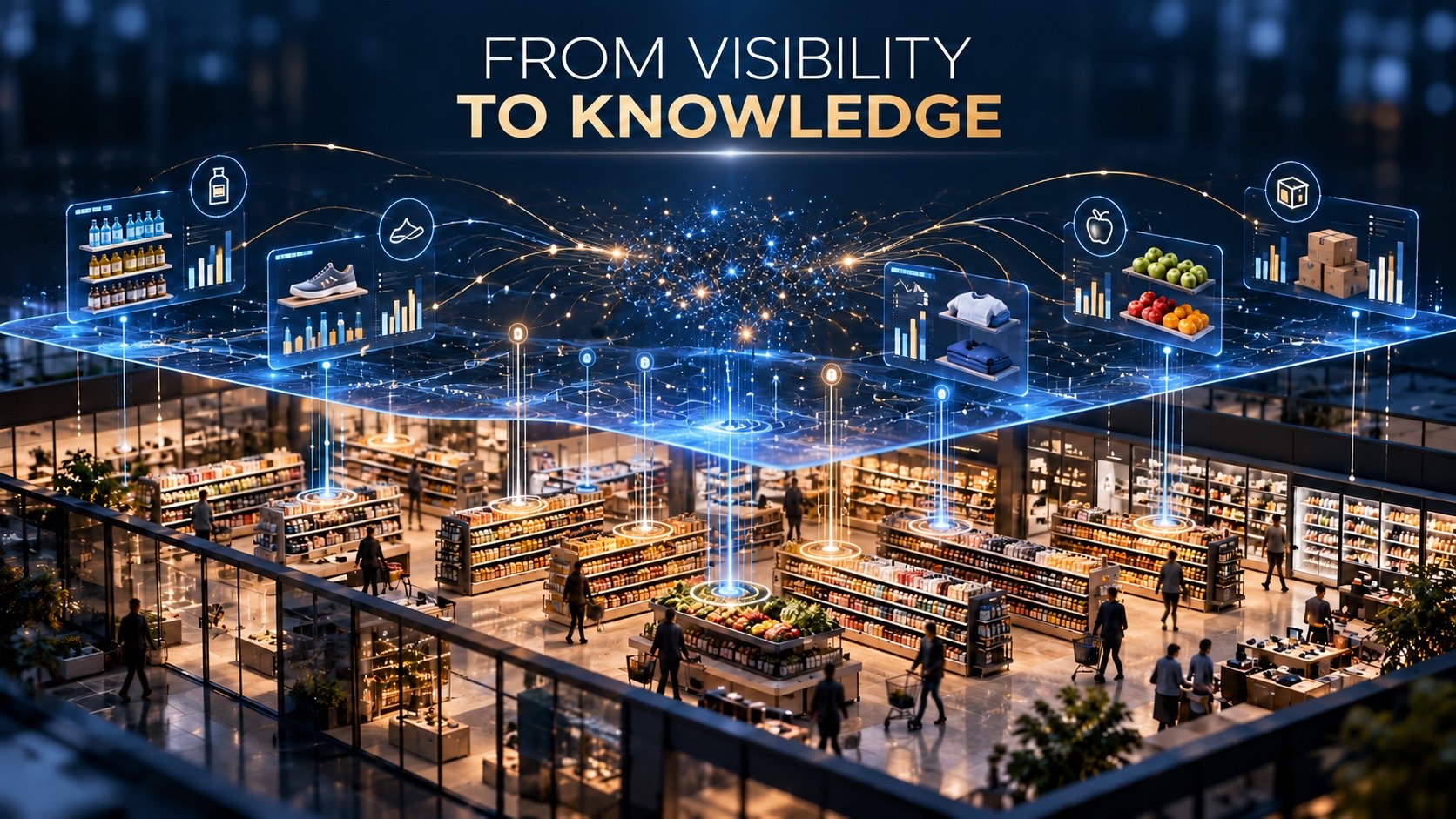
In one week, three stories in grocery technology pointed the same way.
On October 26, Instacart announced it is winding down its Caper Cart business. The company said "retailer adoption has not scaled quickly enough to justify our continued investment," expects pre-tax charges of roughly $55 million to $80 million, and plans to finish the wind-down by the end of the second quarter of 2027. Its in-store work now centers on "intelligence and software," including tools that give grocers and consumer brands "a live view of stores."
On October 29, DoorDash and Instacart announced a definitive agreement for DoorDash to acquire Instacart at an equity value of about $17 billion. The deal still needs approval from Instacart stockholders and regulators, and the companies expect it to close at the end of 2027 or in the first half of 2028.
And in August, Kroger's network reached 500 shelf-scanning robots, with the 500th going live at a new Smith's Marketplace store.
Different decisions, same direction. Retailers want to know what is happening inside the store and carry that into the systems customers rely on.
That is the right instinct. It is also only half the job.
A scan is an observation. A number is a decision.
Seeing the store and knowing its inventory are not the same job. A scan is an observation. An inventory number is something a person is about to act on.
A scan can catch an empty spot, a misplaced product or something that needs attention. That matters. But one look at an aisle does not account for the backroom, the delivery that arrived but has not been entered, or what changed after the robot rolled past.
Picture it. At 9:14 AM, an aisle is scanned and the record is right. By 9:40, a customer has moved a case of water to the back of the store, a vendor has dropped off a delivery that has not been received, and an employee has pulled two items for an online order without scanning them. The record still says what it said at 9:14.
Most systems update records automatically as items sell or get received. Even so, the store and the record drift apart. A misplaced case, an unrecorded move or a late adjustment is enough.
At Aethreallegence, we call that gap Inventory Truth Decay (ITD): the difference that builds between what the record says and what is actually in the building. It does not happen because people are careless. It happens because a store is always moving, and records only change when someone tells them to.
We wrote about how that gap builds between counts in "Manual Audits Are Already Too Late. That Gap Is Your Margin." When errors are recorded but not corrected, accuracy does not hold steady. It falls.
Who checks the robot's work?
This is not an argument against counting, cameras or robots. Scanning more often can surface a problem sooner. It does not fix the record by itself. The value depends on whether someone can check it, reconcile it and act on it.
So the question worth asking is a simple one: who checks the robot's work?
More looks produce more data. They do not tell anyone which numbers to doubt, which ones to recheck, or when to ask a person to walk over and confirm. A store with ten scans a day and no way to judge them has more numbers, not more truth.
Online grocery raises the stakes
An online order is only as good as the store's record of what is on hand. When an order is picked and the item cannot be found, the shopper gets a replacement or a refund. Instacart's own documentation describes both. The customer does not blame the record. They blame the store.
Faster delivery cannot produce a product the store cannot find. The more orders run through a store's inventory record, the more its drift costs.
What comes next
Visibility is real progress. The next challenge is keeping observations, records and decisions aligned as the store keeps changing.
More eyes on the store can help people see a problem. The higher standard is knowing when an inventory number can be trusted, and when it needs another look.
If your system says six units are available, what tells you that six can actually be found?
Sources
- Instacart. Focusing Our In-Store Strategy. October 26, 2026. company.instacart.com
- Grocery Dive. Instacart to stop offering smart carts. October 27, 2026. grocerydive.com
- DoorDash and Instacart. DoorDash to Acquire Instacart to Help Local Stores Win. October 29, 2026. company.instacart.com
- Retail Technology Innovation Hub. 500th robot across Kroger's store network. August 10, 2026. retailtechinnovationhub.com
- Instacart developer documentation. Replacements. docs.instacart.com
- Aethreallegence Field Notes. Manual Audits Are Already Too Late. That Gap Is Your Margin. linkedin.com